

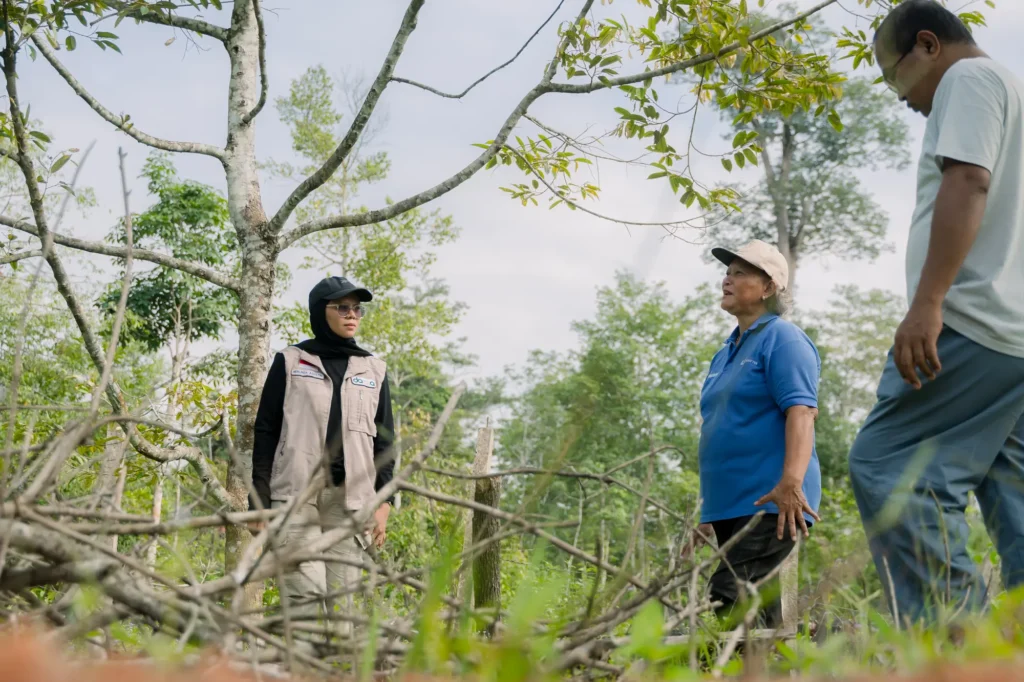
Look closely at any successful carbon project and you’ll find local communities at its heart. Whether it’s local/ indigenous groups guarding an ancestral forest or farmers in a cooperative planting climate-smart crops, local indigenous plants, empowering local people is often the make-or-break factor for a project’s longevity (Preferred by Nature, 2024). When communities are genuine partners (and beneficiaries) in climate projects, everyone wins: Emissions are decreasing, and local economies go up (World Economic Forum, 2023).
Beyond just counting tonnes of carbon reduced, the real measure of success lies in commitment, hard work, passion, love, care, and shared responsibility. Carbon projects should not be seen merely as financial mechanisms, but as a holistic approach to tackling the climate crisis, preserving biodiversity, and most importantly, uplifting communities (Yale Sustainability, 2023). Ensuring that local people are not just participants (through the legit participatory approach) but leaders in these initiatives fosters genuine long-term sustainability.
Here’s the bottom line: climate solutions must also be people solutions. A carbon project in a community isn’t just about the environment; it impacts real people and their lives (CSIS, 2023). By acknowledging this, we can design projects that create jobs, improve local infrastructure, and respect cultural values (Verra, 2024). These projects not only reduce emissions but also foster social development, resulting in a double benefit for investors and policymakers seeking sustainable and inclusive climate strategies (ICVCM, 2024).
Dassa’s Story
The Simpai Monkey, Owa Ungko, A Hidden Spring, and the Circular Economy of Tempino’s Green Haven
Who would have thought that amidst the fragmented landscape of palm oil plantations and human settlements, a small patch of land in Tempino, Jambi, holds a remarkable secret? Once, this area was just an ordinary rubber plantation. But as rubber lost its economic value and was abandoned, nature took over. And then, something unexpected happened, new residents moved in: the Simpai monkey (Presbytis melalophos) and the agile Owa Ungko (Hylobates agilis), two arboreal primates that should never have been found in such a small, isolated area!
But this place is more than just a refuge for wildlife. Hidden within this modest green space is a natural spring, a lifeline for the surrounding communities. It serves not only as a spot for recreation and fishing but also as a crucial source of protein, drinking water, and clean water supply—especially during long dry seasons. Despite its modest size, this green sanctuary plays an invaluable role.
Dassa & Partners in Jambi: A Collaboration for Nature and People
This is not just another conservation effort. Dassa, in collaboration with partners from Jambi, is developing this area as a living example of how nature and people can coexist in balance, protecting and supporting each other.
This partnership extends beyond conservation; it focuses on integrating sustainability into everyday life. By combining Dassa’s expertise in climate solutions with local knowledge and community engagement, the project aims to create a model that balances environmental restoration, economic empowerment, and social well-being.
A Circular Economy Model in Tempino’s Green Haven
This initiative is not just about protecting nature—it’s about creating a sustainable, circular economy that connects the environment, local livelihoods, and education. Here’s how it works:
| The Forest as an Ecosystem Service Provider – More than just a habitat for Simpai monkeys and Owa Ungko, this forest will serve as a learning hub and a forest healing space, where people can reconnect with nature. – The forest acts as a natural water filter, ensuring a continuous supply of clean water for the community. | Sustainable Fruit Farming for Economic Growth – To address habitat fragmentation caused by palm oil plantations, the project will initiate “jangka benah” by planting local fruit trees. – The orchards will not only restore the ecosystem but also create economic opportunities through fruit production, which can be sold or processed into value-added products. |
| Integrated Livestock Farming – Organic waste from the orchards will be repurposed as livestock feed, creating a closed-loop, sustainable farming system. – Livestock products such as eggs and poultry meat will contribute to food security and additional income for local communities. | Education and Community Empowerment – The forest school will provide hands-on education on ecology, sustainability, and nature-based economies. – Community training programs will include regenerative agriculture, non-timber forest product management, and environmental camps. – The site will also serve as a space for learning and reflection, supporting the local vision for a sustainable future. |
From a Small Forest to a Sustainable Future
This initiative in Tempino is a real-world example of how nature and humanity can thrive together, made possible through the collaboration between Dassa and its partners in Jambi.
By designing a circular economy model and embedding sustainability values, this project is not just about preserving an ecosystem—it is about building a better future for both people and the planet.
From clean water and thriving forests to abundant fruit harvests and empowered communities—this is what climate solutions should look like: solutions for nature and for people alike!
REFERENCES :
Preferred by Nature – Empowering Local Communities in Carbon Projects (2024)
World Economic Forum – How Indigenous Knowledge Strengthens Climate Action (2023)
Yale Sustainability – Beyond Carbon Counting: Holistic Approaches to Climate Solutions (2023)
CSIS – The Intersection of Social and Environmental Impact in Carbon Markets (2023)
Verra – Ensuring Community-Led Approaches in Verified Carbon Projects (2024)
Integrity Council for Voluntary Carbon Market (ICVCM) – Sustainable and Inclusive Carbon Credit Strategies(2024)